
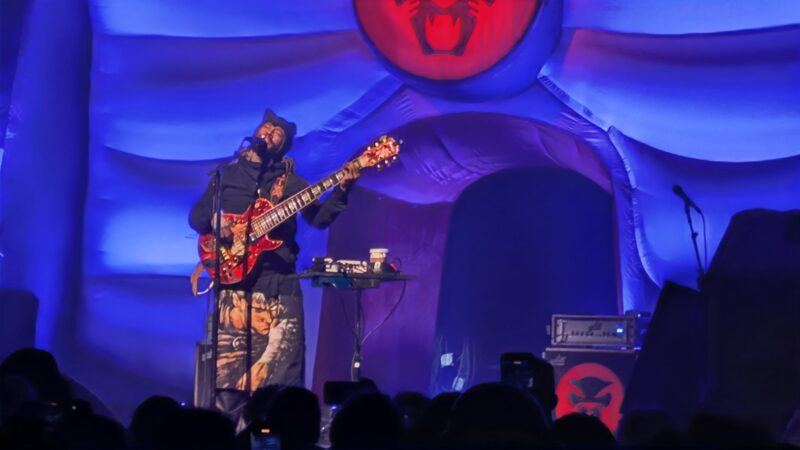
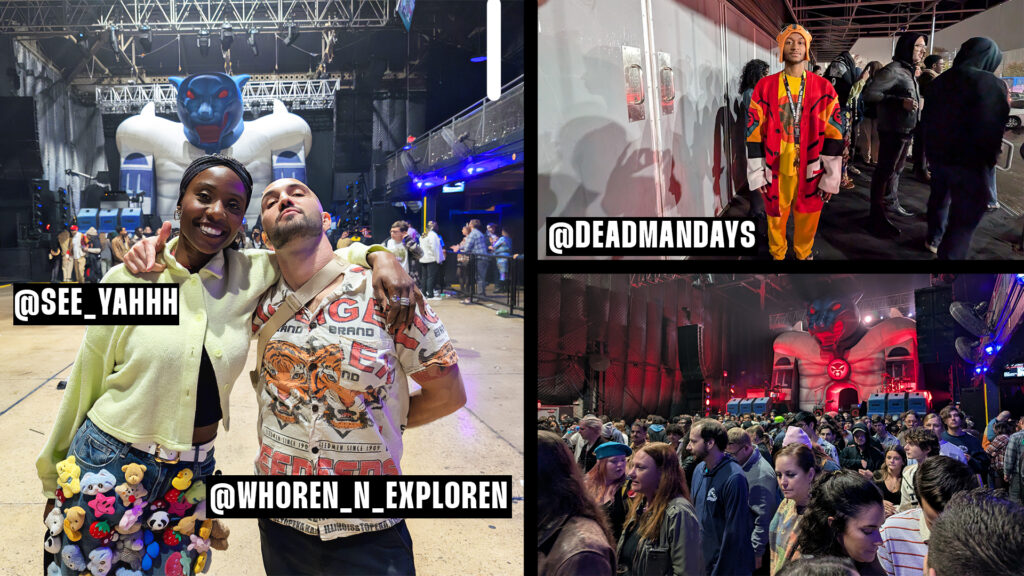
Two days before Halloween, under a gray sky as the sun sets, a crowd unlike any other descends on Franklin Music Hall in Philadelphia. Concert-goers wear Catwoman costumes, Naruto headbands, cat ears, Dragon Ball durags and other anime or cat-themed garments as they file down 7th Street.
Inside Franklin Music Hall, the venue is bathed in blue light and an imposing 15-foot-tall silhouette of a human torso with a panther-like head sits on the stage, its eyes glowing red.
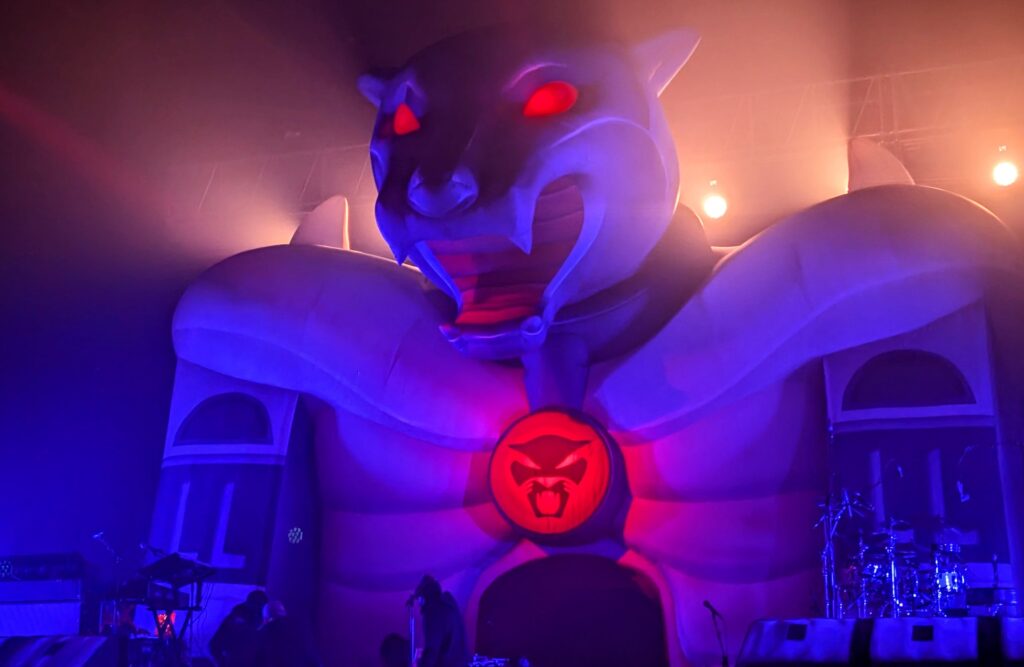
It’s the first truly cold week in Philly, and on the stage a DJ is trying to warm up the crowd, weaving trance-style beats into bass-thumping funk. Some members of the crowd begin to dance, but most are waiting patiently for the headliner, Thundercat.
The DJ announces the end of her set and that Thundercat will be on next. A few moments later, the lights turn all the way down, leaving the massive inflatable beast on stage as the only source of illumination in the entire venue.
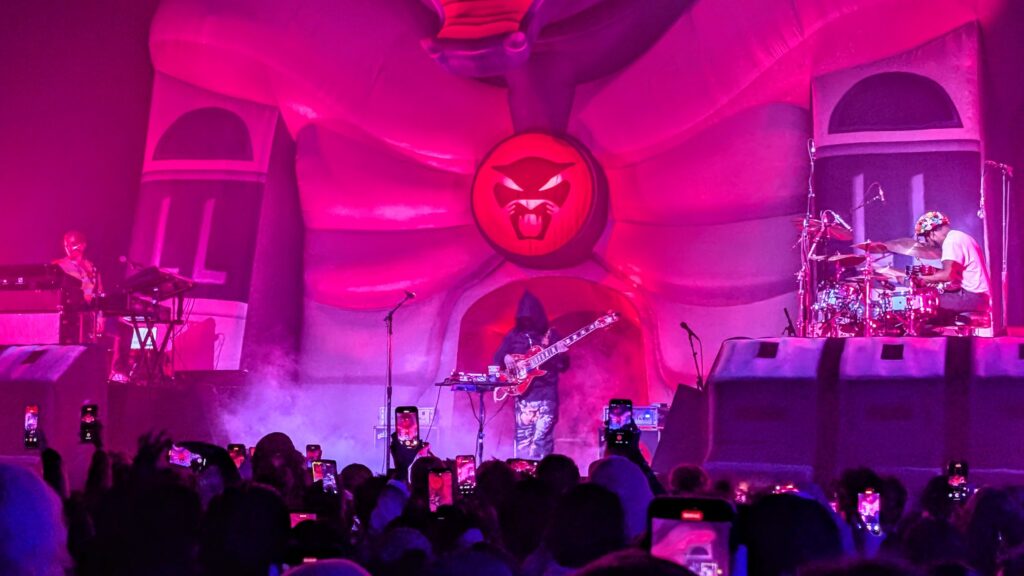
The drummer and keyboardist take their places on either side of the stage. The flamenco guitar and string ensemble of D’Angelo’s “Really Love” booms over the speakers as a spectre emerges from the stomach of the inflatable cat creature. The figure wears a kimono bottom featuring art from the anime Berserk, and a black sweatshirt with a hood so large as to completely obscure his face in shadow. As the lights bloom, the red, six-string bass on the man’s chest glitters like the ocean on the night of a full moon.
The man holding his bass at center stage pulls his hood back, revealing his face and a black cowl with cat ears, vaguely reminiscent of Batman. It’s Stephen Lee Bruner, better known by his stage name – – Thundercat. He shouts “What the f**k is up, Philly?” into the microphone and then dives into one of his most recent singles, “Children of the Baked Potato”. The lush production of the song is perfectly recreated on stage with just Thundercat, his drummer and his keyboardist (toting three different keyboards). The only omission from the song is the feature from the other vocalist on the track, Remi Wolf.
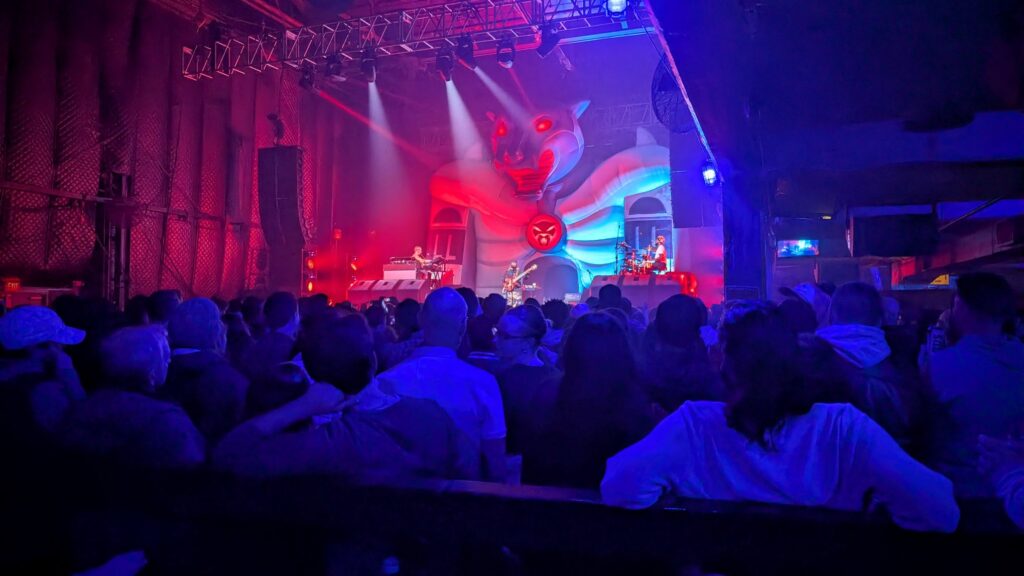
As the song drives towards its end, Thundercat extends the second chorus, jamming with his band and displaying the impressive technical chops of all three musicians on stage. The band is at home wading into the deep waters of complex jazz improvisations.
The crowd is elated in his presence, dancing and bouncing through the new song.
Each successive song features an improvisational section, not found in the recorded versions, which sometimes lasts for several minutes before concluding the final chorus. Thundercat improvises not just with his music, but also with his stage banter, calling out things he sees in the audience as he plays.
At the end of his song “How Sway”, he engages the audience directly to discuss how seriously Philadelphians take their sports. The crowd erupts in cheers and shouts. Thundercat then discusses his hometown baseball team, the LA Dodgers, which is met with even louder boos and jeers. The topic is sensitive for Philadelphians, whose own team fell to the Dodgers in the postseason. Noticing the crowd’s shift after the Dodgers reference, Thundercat hops into one of his most comedic tracks, “Overseas”, and allows the choppy waters to settle.
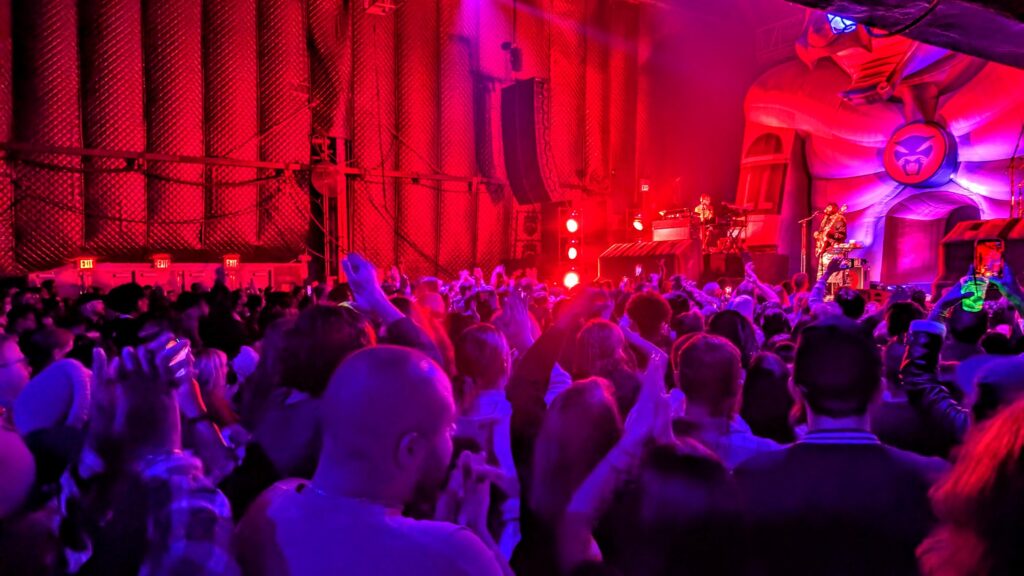
A few songs later, Thundercat wishes the crowd a happy National Cat Day and then starts one of his biggest cult hits, “A Fan’s Mail (Tron Song Suite II)”, which features the lyrics “everybody wants to be a cat.” Halfway through the song, he grabs the microphone with his right hand, playing the bass with only his left, and leads the crowd in a chorus of meows, with hundreds of people screaming their best feline impressions back at him.
Shortly after the song ends, he shares a story with the crowd of the inspiration behind one of his biggest hits, “Dragonball Durag”. He tells us that he had previously dated a British woman who didn’t know what a Durag was and, in teasing her about that fact, he created the song.
Thundercat saves his biggest hits for the final stretch of the two-hour set, moving through “Funny Thing” into a heartfelt rendition of “Lady” by D’Angelo, during which he instructs the crowd to throw their peace signs in the air. Finally, he launches into “Them Changes”, the song everyone has been waiting for. On the last bar of “Them Changes”, the band plays the motif of “Lady” by D’Angelo, clueing the crowd in that both songs share the same key.
It’s clear that the passing of D’Angelo has affected Thundercat deeply, as it has many an R&B fan.
After “Them Changes”, there’s a short, somber encore that ends with “It Is What It Is”, a tribute that Thundercat wrote to another music legend who passed too soon, Mac Miller.
And then, the crowd files out into the pouring rain, undoubtedly thinking about the jubilant experience they just had that ended on such a melancholy note.